
Enterprise AI resource and knowledge workspace
Turn scattered information into knowledge people can find, review and reuse.
Designed around enterprise knowledge operations and AI application management, the workspace brings model and tool resources, task activity and knowledge content into a shared information structure. Search, operational observation and review-to-publishing workflows help teams locate content, check its sources and build a reusable body of knowledge.
From information intake to reusable knowledge
Information intake
Multiple sources · Source records
Selection and organization
Topic grouping · Knowledge search
Review and confirmation
Human review · Publishing scope
Publishing and archives
Structured digests · Date-based lookup
See resources and tasks in context
When models, tools, tasks and knowledge outputs live in separate places, it is difficult to connect resource usage with specific work. The workspace brings together model usage, agent activity, tool calls and collection-run records in a consistent information structure.
Observation views organize resource purpose, execution records and collection times, distinguishing operational information from external summaries to support everyday checks, troubleshooting and subsequent collaboration.
Preserve source and context as knowledge is organized
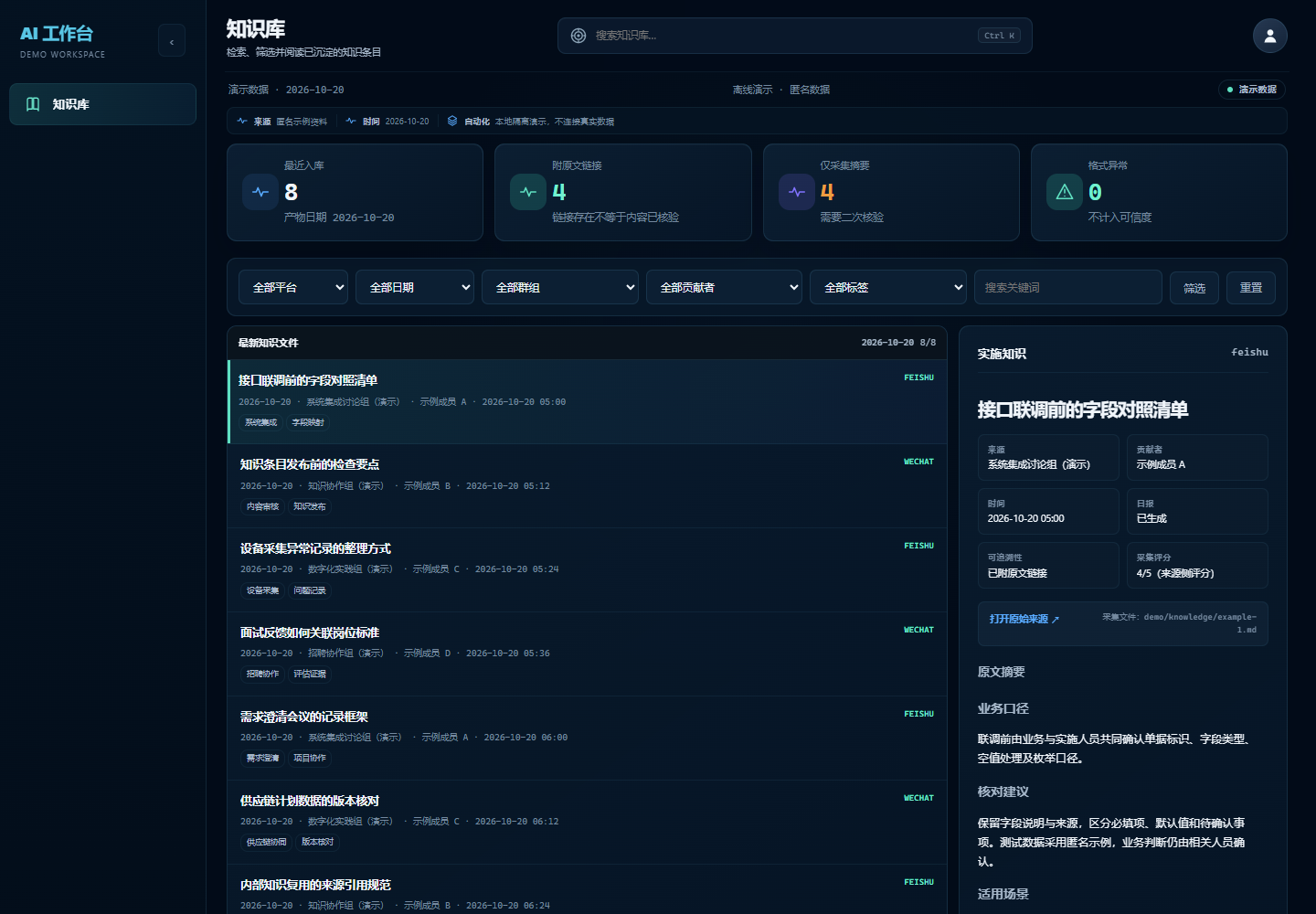
Knowledge search combines date, source and topic filters with list navigation and full-text reading. Entries retain links to their original sources, reducing the need to search repeatedly across separate information channels.
Source, summary and topic provide a common structure for content. Original records, organized outputs and material intended for public release are handled separately, retaining context for review, citation and later reuse.
Make publishing a reviewable process
Existing outputs include structured digests and date-based archives. Summaries, sources, topics and update times support historical lookup and continued content updates.
The publishing workflow combines a human-review policy, allowed-field exports and sensitive-pattern checks, validating source links and content structure before release. Internal operational materials and public content are maintained separately, defining the boundary between knowledge organization and external publishing.